
Professional Security Plan Template for Manufacturing Plants – Practical Experience from Thanh Long Security Company
 This plan has been developed as a factory security plan template and can also be used for professional training of security personnel working at garment, textile, yarn, paper, packaging, cement, wood, steel, electronics, food-processing and other industrial manufacturing facilities.
Every factory has different production characteristics, layouts, assets, workforce sizes, vehicle movements and levels of risk. Therefore, this document should be regarded as an operational framework. Before actual deployment, Thanh Long Security Company conducts an on-site survey, determines the required security posts, manpower, working hours, responsibilities and specific control procedures before submitting the detailed security plan to the client for approval.
Thanh Long Security Company's Experience in Factory Security
Thanh Long Security Company has operated independently since 2009, building on experience in the security service industry in Da Nang dating back to 2004. Throughout its operations, security services for factories, companies, industrial facilities and industrial parks have remained one of Thanh Long's important professional service areas.
Practical experience at Germton Factory shows that when a factory expands, the number of workers increases and more international customers visit the facility to inspect production capabilities, the security plan must also be regularly reviewed and updated. Thanh Long has provided security services to Germton since 2016 and has developed specific responsibilities for multiple security positions throughout the factory.
Representative Factory Clients Using Thanh Long Security Services
Thanh Long's experience in developing security plans has been built through providing services to different types of manufacturing plants in Da Nang, Quang Ngai, Gia Lai and throughout Central Vietnam.
| Client / Factory | Location | Industry |
|---|---|---|
| Germton Factory (GI) | Dong Que Son Industrial Park, Que Son area | Garment – Textile |
| GA – GI Group | Phu My, Gia Lai | Industrial manufacturing |
| GD – GI Group | Phu Ninh | Industrial manufacturing |
| GY – GI Group | Dong Que Son Industrial Park | Industrial manufacturing |
| Da Nang Steel | Da Nang | Steel manufacturing |
| VICEM Hai Van Cement | 65 Nguyen Van Cu, Da Nang | Cement manufacturing |
| Tan Dat Packaging | Dien Nam – Dien Ngoc Industrial Park | Industrial packaging |
| P.D.K Paper Factory | Central Vietnam | Paper manufacturing |
| Da Nang Mien Trung Paper | Da Nang | Paper manufacturing |
| Hung Vi Steel Factory | Dien Nam – Dien Ngoc Industrial Park | Steel manufacturing |
| Sumida Electronic Quang Ngai | Tinh Phong Industrial Park, Quang Ngai | Electronics |
| RIO Yarn Factory | Tay An Industrial Park, Duy Xuyen area | Textile – Yarn |
| Roofing Sheet Factory | Trang Nhat Industrial Park | Construction materials |
| Chef Meat Vietnam | Tho Quang Seafood Services Industrial Park, Da Nang | Food processing |
| PTTI | An Don Industrial Park, Da Nang | Industrial manufacturing |
| CAS | Hoa Cam Industrial Park, Da Nang | Industrial manufacturing |
| Vinatex | Tu Nghia, Quang Ngai | Garment manufacturing |
| May 28 Quang Ngai Company | Quang Ngai | Garment manufacturing |
| PanKo E and D Company | Tam Thang Industrial Park | Garment, logistics, warehousing and environmental services |
| Hai Au Xanh Dacotex Garment Company | Bac Chu Lai Industrial Park | Garment manufacturing |
| HanGil Company | Tam Anh Korea Industrial Park | Garment and electrical manufacturing |
| GreenPro Company | Chu Lai Industrial Park | Construction materials and paint |
| Acecook Vietnam – Da Nang Branch | Hoa Khanh Industrial Park, Da Nang | Food manufacturing |
| Tristar Garment | Hoa Khanh Industrial Park, Da Nang | Garment manufacturing |
Principles for Developing a Factory Security Plan
- Survey the entire perimeter, main gate, secondary gates, fences, workshops, warehouses, parking areas, electrical stations, fire prevention and firefighting areas, and waste or scrap collection areas.
- Identify the movement flows of visitors, workers, contractors, delivery vehicles, supplier vehicles, food-service vehicles, garbage trucks and scrap-removal vehicles.
- Identify critical areas, restricted areas and locations where theft or asset loss may occur.
- Clearly define access documents, authorized approvers and procedures for controlling goods.
- Each security post must have clearly defined responsibilities, duty logs, handover records, patrol routes and communication procedures.
- The detailed security plan must be reviewed and agreed upon by the client or facility management before implementation.
Years of Factory Security Experience: Preventing Asset Loss
Preventing asset loss is one of the most important responsibilities of a factory security force.
Stolen assets may be moved over perimeter fences or concealed on individuals, inside bags or in personal vehicles. However, based on practical experience in manufacturing plants, cases involving organized, repeated or high-value losses require particular attention to vehicles that regularly enter and leave the factory.
1. Trucks and Supplier Vehicles
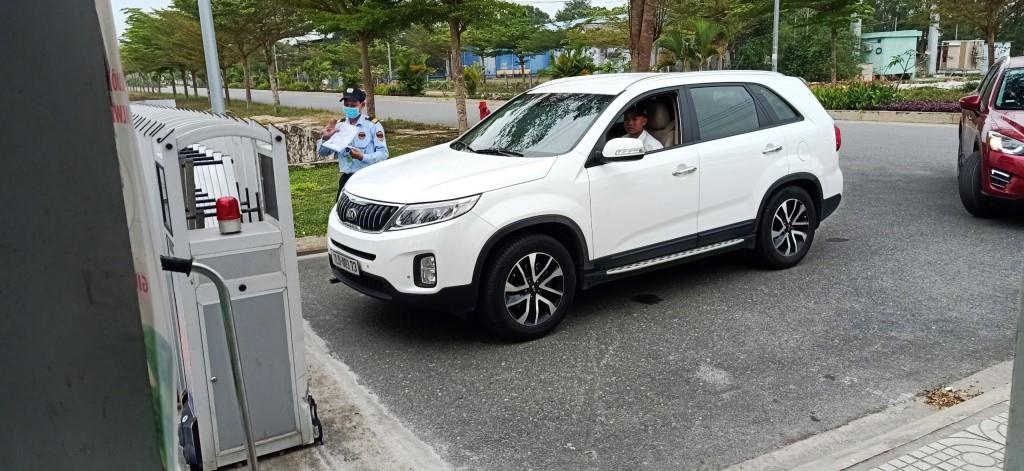
These vehicles regularly transport raw materials, equipment or goods into and out of factories. Security personnel must verify entry authorization, inbound and outbound documents, vehicle registration numbers, driver information and other relevant details.
When a vehicle leaves the factory, inspections should be conducted in accordance with the facility owner's procedures, with particular attention to:
- Vehicle cabin.
- Cargo compartment.
- Vehicle undercarriage.
- Storage compartments.
- Security seals, where applicable.
- Actual goods compared with the approved outbound documentation.
2. Vehicles Removing Leftover Food from the Factory
This type of vehicle can easily be overlooked during security checks. Company property may potentially be concealed inside containers used for leftover food and removed from the factory.
Security personnel should control the collection company, driver, number of containers and entry/exit times, and conduct inspections in accordance with procedures approved by the facility management.
3. Garbage, Production Waste and Scrap Vehicles
Factories should clearly distinguish between general waste, production waste and scrap materials that retain commercial value.
Vehicles carrying garbage, production waste or scrap outside the factory must have the required documents or gate passes. Security personnel should monitor loading when necessary and inspect vehicles before they leave the premises.
If suspicious circumstances are detected, security personnel should not independently accuse any individual of wrongdoing. They must immediately report the matter to the shift commander and the facility representative, preserve the situation within the scope of their responsibilities and prepare an incident report according to established procedures.
Detailed Security Procedures by Security Post
I. Procedures for Positions A1 + A2 – Factory Gate
This is one of the most important positions within the factory security system.
1. Visitor Access Control
When Visitors Enter the Factory
- All visitors must present photo identification or a company business card before entering the production area.
- If appropriate identification is unavailable, security personnel must contact the relevant department directly for confirmation.
- Security personnel register the visitor in the visitor log, including full name, company, identification details, host, purpose of visit and entry time.
- Visitors are required to sign the relevant registration record in accordance with factory procedures.
- A visitor pass is issued and the visitor is directed to the appropriate working area.
For Subcontractors
- Register the subcontractor's personnel list.
- Register assets, machinery and tools brought onto the premises.
- Check access permits in accordance with factory regulations.
- Communicate the facility's security, occupational safety and fire prevention and firefighting rules.
When Visitors Leave the Factory
- Collect visitor passes and any items issued to visitors.
- Record the visitor's exit time.
- Complete the visitor check-out procedure in accordance with factory regulations.
2. Controlling Workers Entering and Leaving the Factory
When Workers Enter the Factory
- Check employee identification cards.
- Check uniforms and personal protective equipment as required by the facility management.
- Prevent prohibited or hazardous items from being brought into the factory.
- Control workers' vehicles according to factory regulations.
When Workers Leave the Factory
- Check identification cards and vehicles.
- Workers leaving during working hours must have a gate pass, business assignment document or approved leave authorization signed or confirmed by an authorized person.
- Security personnel record workers entering or leaving during working hours.
- When instructed by the facility management or when unusual circumstances are detected, bags and personal belongings may be inspected in accordance with company rules and the authority granted to security personnel.
- Company property may only be removed from the premises with valid authorization.
3. Controlling Cargo Trucks
When Vehicles Enter the Factory
- Confirm the driver's full name, company, purpose of entry and department to be contacted.
- Contact the relevant department for confirmation.
- Register the driver's name, company, driver's license information, vehicle registration number and entry time.
- Require the driver to declare personal assets or items unrelated to the delivery so they can be verified upon departure.
- Check the vehicle's safety condition before allowing it to enter the facility.
- Record whether the vehicle is entering to deliver or collect goods.
When Vehicles Leave the Factory
- The vehicle must stop at the gate control point.
- The driver must present documents relating to goods being taken outside.
- Security personnel inspect and compare the actual goods with the outbound documentation.
- Check the type, quantity, product code, date, time and signature of the authorized approver.
- Inspect the cargo compartment, undercarriage, sides of the vehicle and cabin in accordance with established procedures.
- Goods without valid authorization or supporting documentation must not be released.
- The vehicle may leave the factory only after all security control procedures have been completed.
4. Controlling Equipment, Materials and Production Supplies
When Materials Enter the Factory
- Check invoices, product types, quantities and product codes.
- Contact the relevant department of the facility for confirmation.
- Record the materials in the relevant registration log.
When Materials or Assets Leave the Factory
- Check invoices or warehouse release documents bearing the signature of an authorized person.
- Compare the actual goods with the supporting documents.
- Check product type, code, quality and quantity.
- Record the transaction in the outbound goods log.
- Retain documents according to the facility's regulations.
5. Other Responsibilities of Factory Gate Security Personnel
- Manage telephones, keys and assigned equipment.
- Monitor fire protection systems, alarms, cameras and internal communication systems located in the security room.
- Guide visitors entering and leaving the factory.
- Maintain complete, accurate and properly organized records.
- Monitor the situation and report to authorized personnel when required.
- Maintain communication with other security posts.
- Conduct complete shift handovers.
- Manage letters and parcels according to established procedures.
- When the factory is not operating, close the gates and increase patrol and monitoring activities.
- Maintain cleanliness around the main gate and security room.
II. CCTV Security Procedures
- Security personnel remain on duty in the CCTV control room according to the assigned shift.
- Monitor camera feeds covering different areas of the factory.
- If a camera malfunctions, changes angle or loses signal, report the problem to the technical department.
- Monitor critical areas including gates, warehouses, production workshops, inbound/outbound goods areas and perimeter fences.
- If suspicious behavior or unusual circumstances are detected, immediately notify the shift commander and the nearest security position.
- Record and document incidents when they occur.
- Support other security positions when necessary.
III. Shift Commander and Factory Patrol Position
- Monitor compliance with company rules, occupational safety regulations and fire prevention and firefighting requirements.
- Handle security and public-order incidents within the assigned scope of responsibility.
- Patrol and inspect fire prevention and firefighting systems.
- Check windows, doors, glass doors, seals, locks and small access routes.
- Inspect isolated areas and locations vulnerable to unauthorized entry.
- Check electrical systems, air-conditioning equipment, pipelines, boilers, air compressors, generators, substations and pumping stations.
- Pay particular attention to areas containing fuel, chemicals or flammable materials.
- After working hours, inspect electrical equipment in accordance with factory procedures.
- Check that doors are closed and required seals have been applied after working hours.
- Inspect the factory perimeter fence.
- Maintain communication with the main gate and other security posts.
- Record the condition of the facility after every patrol round.
- Prevent unauthorized persons from entering restricted areas.
- Monitor the activities of subcontractors and machinery maintenance personnel.
- Check security staffing levels and the performance of duties at each position.
- Coordinate with the facility representative within the shift commander's assigned responsibilities.
IV. Production Workshop Entrance Control
- Security personnel receive the handover of assets and the assigned post before beginning duty.
- Monitor workers entering and leaving production workshops.
- Control items permitted or prohibited in production areas according to factory regulations.
- Violations of factory regulations must be reported and documented according to established procedures.
- Control workers leaving workshops during working hours.
- Control workers leaving at the end of their shifts.
- Inspect bags, belongings or food containers where required by the facility management and within the authorized scope of the security personnel.
- Company property must not be removed without an authorized gate pass signed by an approved person.
- When overtime is scheduled, workshop security positions must remain on duty until workers complete their shifts.
- After all workers have left, inspect workshop doors and apply seals according to factory procedures.
- Patrol surrounding areas and immediately report unusual signs to the shift commander or facility representative.
V. Factory Parking Area Security
- Maintain security and order in parking areas.
- Ensure vehicles are parked in designated locations.
- Prevent theft of vehicles and property stored on vehicles.
- Control vehicles entering and leaving through the factory's card or vehicle management system.
- Identify vehicles or individuals displaying unusual behavior.
- Ensure access routes and fire-engine lanes remain unobstructed.
VI. Patrols Around the Factory
Patrol security personnel are responsible for monitoring areas inside and around the factory, particularly perimeter fences, blind spots, warehouses, raw-material storage areas, finished-goods areas, production waste and scrap areas, and locations where security incidents may occur.
- Inspect perimeter fences and possible intrusion points.
- Check doors, locks and seals.
- Inspect raw-material and finished-goods warehouses.
- Inspect production waste and scrap areas.
- Inspect areas with fire or explosion risks.
- Check nighttime lighting systems.
- Fully document each patrol round.
- Immediately notify the shift commander when unusual signs are detected.
Adapting the Security Plan to Different Types of Factories
Security Plan for Garment, Textile and Yarn Factories
For garment factories, priority should be given to controlling raw and auxiliary materials, finished goods, workshop entrances, workers entering and leaving, finishing and packaging areas, contractors and international customers visiting the factory for inspections.
Security Plan for Paper and Packaging Factories
For paper and packaging factories, fire prevention and firefighting is one of the most important security responsibilities. Security personnel should regularly inspect paper warehouses, raw materials, scrap, electrical sources, heat sources, production areas and transport vehicles.
Security Plan for Cement Factories
Cement factories typically have high volumes of trucks and vehicles transporting raw materials. The security plan should focus on truck control, raw-material and finished-product flows, electrical substations, conveyor systems, fuel storage areas, restricted zones and occupational safety.
Security Plan for Wood Processing Factories
Wood-processing factories require particular attention to fire risks arising from wood dust, raw materials, finished products, paint and adhesive chemicals, and heat sources.
Security personnel should closely monitor timber warehouses, production workshops, timber transport vehicles, production waste areas, electrical systems and fire prevention and firefighting equipment.
Reference Factory Security Service Rates for 2026 Budget Planning
Note: Thanh Long Security Company's currently published price list is the 2026 price list. Therefore, the following figures should only be used as reference data when preparing a budget for 2028.
- Reference rate for fixed-site security services in 2026: approximately VND 25,000–50,000 per security officer per hour.
- A 24/7 security position: approximately VND 17–25 million per position per month.
- Actual prices may vary by approximately ±15% depending on the characteristics of the site, location, number of positions, working hours, risk level and equipment requirements.
See details: Thanh Long Security Service Price List 2026 .
When preparing quotations for factory security services in 2028, Thanh Long will conduct an on-site survey and update personnel costs, insurance costs, applicable legal requirements, deployment location and the client's specific requirements at the time the quotation is prepared.
THANH LONG PROFESSIONAL SECURITY SERVICES
1. Industrial & Manufacturing Security
Security for Companies, Factories and Industrial Facilities in Industrial Parks
- Summary: Main-gate security control, production workshop patrols, fire prevention and firefighting, and prevention of asset loss.
- Suitable for: Manufacturing plants, garment factories, mechanical engineering facilities, electronics factories, food factories, paper mills, wood-processing factories, cement factories and companies located in industrial parks.
- Service areas: Da Nang, Quang Ngai, Gia Lai, Hue and Central Vietnam.
Warehouse Security Services
- Summary: Control of inbound and outbound goods, CCTV monitoring, and protection of raw materials and finished products.
- Suitable for: Distribution warehouses, cold storage facilities, storage yards and logistics centers.
2. Office & Institutional Security
Office and Institutional Security
Maintaining security and order, controlling visitors, managing vehicles and responding to security incidents at offices, institutions and corporate headquarters.
Integrated Factory & Office Security
An integrated security solution for production and administrative areas located within the same corporate premises.
3. Urban Infrastructure & Residential Security
- Commercial Building, Apartment & Social Housing Security
- Villa & Resort Security
- Construction Site Security
4. Hospitality, Commercial & Tourism Security
- Hotel and resort security.
- Shopping Mall & Supermarket Security
5. Education & Healthcare Security
- Security services for schools and educational institutions.
- Security services for hospitals, clinics and healthcare facilities.
6. Event Security & Mobile Security Assignments
Event Security and Escort Services
Providing security personnel for events, conferences, cultural and sporting programs, VIP guests, business executives and assignments requiring customized security plans.
Frequently Asked Questions About Factory Security Plans
1. Can the same factory security plan be applied to every factory?
No. Although the operational framework may be similar, the number of security officers, security posts, patrol routes, control procedures and forms must be adapted to the type of manufacturing operation, facility layout, number of workers, value of assets and specific requirements of each company.
2. What information should a factory provide when developing a security plan?
Important information includes the site layout, number of gates, perimeter fences, operating hours, number of workers, movement flows of people, vehicles and goods, warehouses, restricted areas, fire prevention and firefighting regulations, occupational safety requirements and the list of authorized approvers.
3. What security positions are commonly required at a factory?
Depending on the size of the factory, a security plan may include positions at the main gate, secondary gate, inbound/outbound goods area, CCTV control room, patrol routes, workshop entrances, warehouses, parking areas and a shift commander.
4. How can factories reduce the risk of asset loss?
In addition to controlling people and goods, particular attention should be given to vehicle flows that could potentially be used to remove assets from the factory, including supplier and delivery vehicles, leftover-food collection vehicles, garbage trucks, production-waste vehicles and scrap-transport vehicles.
5. In which areas does Thanh Long provide factory security services?
Thanh Long focuses on providing services in Da Nang and Central Vietnam, including Da Nang, Quang Ngai, Gia Lai, Hue and relevant industrial parks and industrial clusters. Projects in other locations are surveyed individually and deployment plans are developed according to actual requirements.
Contact Thanh Long for a Factory Security Survey and Security Plan
Companies requiring security services can provide information such as the site layout, number of gates, production shifts, workforce size, delivery vehicle flows and any special security control requirements.
Thanh Long Security Company will conduct an on-site survey, assess security risks and develop a security plan covering the number of security posts, required manpower, working hours, responsibilities of each position, patrol arrangements, goods-control procedures and a quotation appropriate to the individual factory.
Vietnamese version: Mẫu phương án bảo vệ nhà máy chuyên nghiệp
Website: baovedanang.vn